 AI视界
AI视界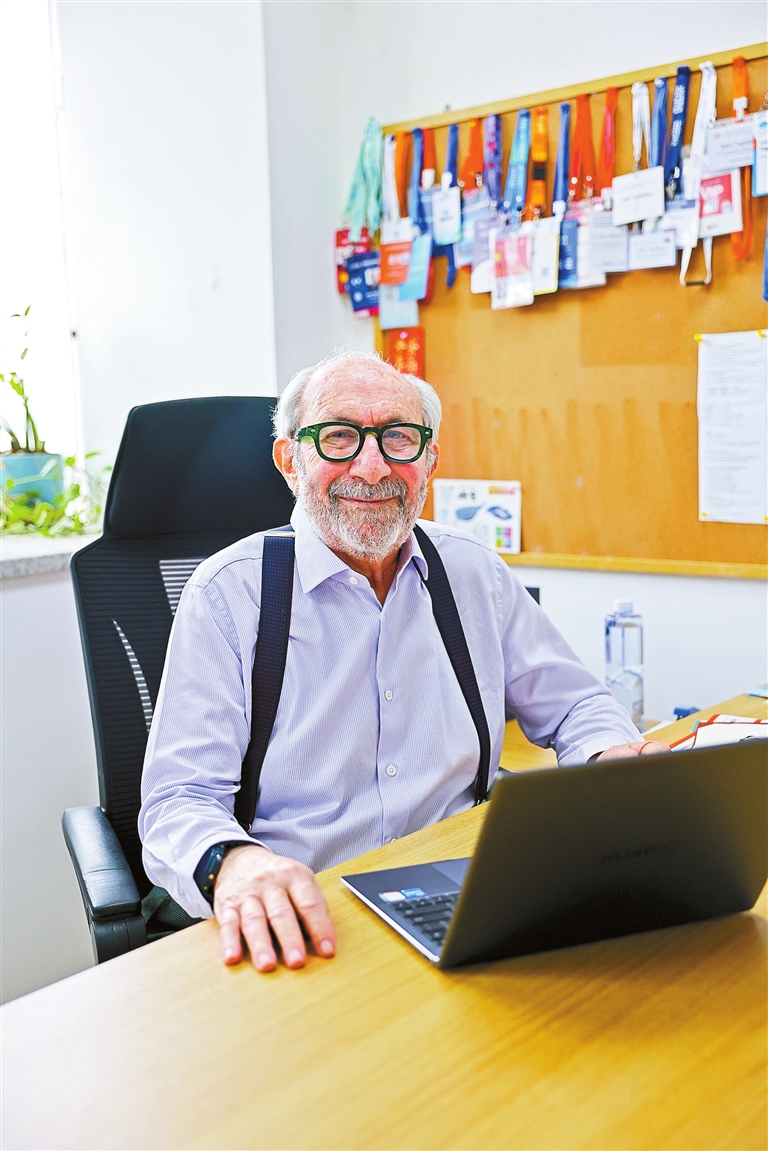
爱德·塔利亚布教授接受记者专访。 深圳特区报记者 姜鑫 摄 Prof. Aldo Tagliabue during an interview with Shenzhen Special Zone Daily. Jiang Xin
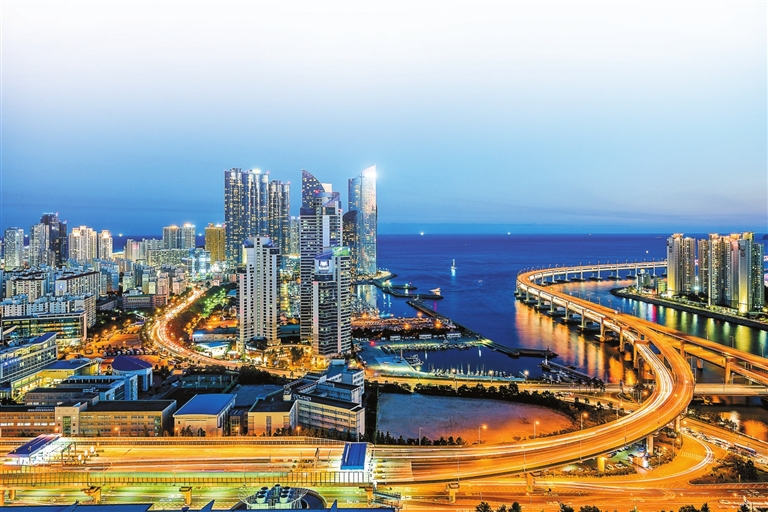
釜山Marine City和广安大桥夜景。 Night view of Busan’s Marine City and Gwangan Bridge.
深圳新闻网2026年5月20日讯(深圳特区报记者 吴徐美)在深圳先进技术研究院研究员、免疫与炎症研究室首席科学家爱德·塔利亚布眼中,疫苗从来不是冰冷的科研产物,而是守护人类健康的“隐形盾牌”。深耕免疫学领域半个世纪、横跨欧美亚三大洲的他,曾参与研发出人类首款重组无细胞百日咳疫苗、B型脑膜炎疫苗等成果,手握11项科研专利,两度斩获意大利科研转化最高奖,用技术为全球公共卫生保驾护航。如今,他扎根深圳深耕疫苗研发,牵头组建科研团队、推动国际合作。谈及2026年深圳APEC会议,这位来自意大利的科学家表示,“深圳不仅是盛会承办地,这座城市本身也将成为亚太科创协同的核心枢纽。”
跨越半个世纪的免疫科研路
走进塔利亚布教授的办公室,最先映入眼帘的是墙上张贴的两张地图,除了一张硕大的中国地图,一旁的深圳市地图上,已被这位来自意大利的科学家圈出了许多深圳知名地标,他还用手比画了一下深圳与香港的距离:“就在河对岸,很近。”
“我几乎是偶然进入免疫学领域的。”塔利亚布回忆称,那是在20世纪70年代中期,免疫学正以惊人的速度发展,他抱着试试看的心态踏入这片新天地,却从此爱上了这门科学。在塔利亚布40多年的职业生涯中,他最引以为傲的高光时刻,就是与疫苗大师里诺·拉普奥利共事的岁月。“我们成功研发了两款重要疫苗,一是重组无细胞百日咳疫苗,这是人类历史上第一个针对细菌性疾病的重组疫苗。二是通过‘反向疫苗学’技术研发的B型脑膜炎疫苗Bexsero。”他感慨道。
“疫苗不是大生意,却是救命的事业。”塔利亚布强调,“相比需要终身服药的慢性病药物,疫苗可能只需几十美元,但它能彻底改变一个地区的疾病负担。”
扎根深圳开启疫苗研发新篇
塔利亚布与中国的缘分,最早可追溯至2006年。彼时他任职韩国首尔国际疫苗研究所研发主任,牵头协调中、韩、德、意四国科学家组建项目团队,合力攻关SARS疫苗研发。项目年度会议在上海举办,这也是他第一次踏上中国土地。
此后20年间,他始终与中国科研界保持密切学术交流与项目合作。2019年,曾共事的中方学者向他发出邀约,邀请其加盟中国科学院深圳先进技术研究院。“我认为这是在中国科研沃土开启全新事业的绝佳契机。”塔利亚布说,他与同为科研工作者的妻子商议后,下定决心举家奔赴深圳,筹建专注于感染免疫与疫苗研发的科研团队。
“为了让我们提前了解深圳这座城市,我女儿还送了一本《深圳试验:中国速生城市的故事》给我们。从这本书里,我知晓并回顾了深圳在过去40多年间如何崛起为一座千万级人口的现代化国际城市。”塔利亚布表示。
记者留意到,办公室醒目位置摆放着“炎症与疫苗研究室”牌匾,这是塔利亚布加盟中国科学院深圳先进技术研究院后,牵头组建聚焦新型免疫治疗药物与创新疫苗研发的实验室。同时,作为先进院炎症与疫苗研究室首席科学家,他代表深圳先进院建立并推动多个国际合作项目的落地,包括参与中国科学院“一带一路”国际合作项目、比尔及梅琳达·盖茨基金会项目、参与国家自然科学基金国际合作研究项目、联合意大利锡耶纳生命科学基金会联合攻关人体抗新冠病毒免疫力效果研究等,并致力于推动广泛的中欧合作及建立中意联合实验室等。
如今,塔利亚布教授培养出数十名中国人才并且以中国为中心开展了10余次人才与技术交流活动,组建了覆盖免疫学、疫苗学、纳米医学等研究方向的20余人科研团队,助力推动中国疫苗产业加速国际化发展。
深圳将成为APEC会议关注焦点
作为一位亲身经历过多次跨国合作的科学家,塔利亚布对2026年在深圳举办的APEC会议寄予厚望:“APEC汇聚21个经济体,在组织架构与协作模式上,与欧盟有着相似之处,即必须汇聚各方力量,整合资金、技术等资源,才能在科技创新领域形成合力、协同攻关。”
“事实上,深圳不仅是此次举办APEC的东道主,城市本身,也将成为APEC会议关注的焦点之一。”塔利亚布说,作为粤港澳大湾区核心引擎城市,深圳串联起港澳与内地创新资源,是全球数据治理、人工智能、生物技术融合发展的重要枢纽。
从米兰到锡耶纳,从首尔到深圳,这位意大利科学家的科研人生横跨大陆、穿越时间。而在他的办公室里,那些密密麻麻标注的地图、手绘贺卡,正无声地讲述着一个关于热爱与选择的故事,正如他自己所言:“当你有一个梦想,你就必须去实现。”
Aldo Tagliabue, a researcher at Shenzhen Institutes of Advanced Technology of the Chinese Academy of Sciences and chief scientist of the Laboratory Inflammation and Vaccines:
Shenzhen: The beating heart of Asia-Pacific’s tech synergy
■ Wu Xumei, Shenzhen Special Zone Daily
To Italian immunologist Aldo Tagliabue, vaccines are never mere “cold scientific products.” Instead, he views them as “invisible shields” safeguarding human life.
Now a researcher at the Shenzhen Institutes of Advanced Technology (SIAT) of the Chinese Academy of Sciences and chief scientist of the Laboratory of Inflammation and Vaccines, Tagliabue brings half a century of expertise spanning Europe, the Americas, and Asia to China’s “Silicon Valley.”
With 11 scientific patents and two of Italy’s highest awards for scientific technology transfer, Tagliabue is perhaps best known for his role in developing the world’s first recombinant vaccine against Bordetella pertussis (whooping cough) and the Meningococcus B vaccine. Today, his focus is rooted in Shenzhen, where he leads a diverse scientific team and fosters high-level international collaboration.
“Shenzhen is more than just a host city,” Tagliabue said, referring to the upcoming 2026 APEC meeting. “The city itself has become a core agenda item for Asia-Pacific technological collaboration.”
Tagliabue’s office offers a glimpse into his dual world. On the wall, a large map of China hangs alongside a map of Shenzhen, where he has circled dozens of local landmarks. Gesturing toward the border, he noted, “Hong Kong is just across the river — it is very close.”
His entry into the field of immunology in the mid-1970s was almost serendipitous, he recalled. At the time, the field was evolving at an astonishing pace. He took a chance on the burgeoning science and never looked back.
The peak of his 40-year career came while working alongside the renowned Italian vaccine pioneer Rino Rappuoli. Together, they developed the recombinant acellular pertussis vaccine — the first of its kind against a bacterial disease — and Bexsero, a meningitis B vaccine created using groundbreaking “reverse vaccinology.”
“Vaccines are not a big profit-making business; they are a life-saving cause,” Tagliabue said. “Unlike chronic disease drugs that require lifelong use, a vaccine costing a few dozen dollars can alleviate the entire disease burden of a region.”
Tagliabue’s relationship with China began in 2006. While serving as the R&D director at the International Vaccine Institute in Seoul, South Korea, he coordinated a multinational team from China, South Korea, Germany, and Italy to develop a SARS vaccine. He first visited China in 2006 for the project’s annual meeting in Shanghai.
In 2019, a long-time Chinese colleague invited him to join SIAT. “I saw this as a perfect opportunity to start a new chapter in China’s fertile scientific ground,” he said. After consulting his wife — also a researcher — the couple relocated to Shenzhen to establish a research team dedicated to infection immunology and vaccine development.
To prepare for the move, his daughter gave him a book titled “The Shenzhen Experiment: The Story of China’s Instant City. ” “From that book, I learned how Shenzhen transformed into a modern international metropolis of over 10 million people in just 40 years,” he said.
At SIAT, Tagliabue led the establishment of the Laboratory of Inflammation and Vaccines. He represents the institute in several major international initiatives, including Bill & Melinda Gates Foundation ventures and joint research with Italy’s Fondazione BioSciences on COVID-19 immune responses. He is also working to expand China-Europe ties and pave the way for a new Sino-Italian joint lab.
To date, Tagliabue has mentored dozens of Chinese researchers and built a 20-person team specializing in immunology, vaccinology, and nanomedicine.
Looking ahead to the 2026 APEC meeting, Tagliabue draws a parallel between the 21-member bloc and the European Union. “APEC mirrors the EU in its reliance on collective strength,” he noted. “To achieve scientific breakthroughs, we must pool our financial and technical resources, forging a unified force for innovation.”
“Beyond being the host city, Shenzhen itself will be at the heart of the Asia-Pacific's tech innovation agenda. As a core engine of the Guangdong-Hong Kong-Macao Greater Bay Area, the city is an essential hub for the integration of global data governance, AI, and biotechnology.”
From Milan to Siena, and Seoul to Shenzhen, Tagliabue’s career has bridged continents. In his office, the annotated maps and hand-drawn cards serve as a testament to his journey.
“When you have a dream,” he said, “you must go and achieve it.”
(Translated by Li Jing)
回眸APEC
APEC Through the Years
第十三站:韩国釜山
亚太经济合作组织领导人第13次非正式会议于2005年11月18日在韩国釜山举行,会议完成了对茂物目标的中期审评,制定了旨在实现茂物目标的“釜山路线图”。
釜山位于韩国东南端,是韩国最大的港口和第二大城市,为韩国6个广域市之一,也是国际旅游城市。釜山是韩国工商、金融和信息中心,为通向世界的欧亚大陆枢纽城市,釜山镇海经济自由区的建立进一步巩固了该地贸易中心和金融中心的地位。
13th Stop:
Busan, South Korea
The 13th APEC Economic Leaders’ Meeting convened in Busan, South Korea, on Nov. 18, 2005. The summit completed a midterm review of the Bogor Goals and adopted the “Busan Roadmap” to accelerate free and open trade.
Perched on southeastern tip of the Korean Peninsula, Busan is South Korea’s largest port and second-largest city. A gateway to the world and a vital Eurasian hub, the city excels in industry, finance, and information technology. The Busan-Jinhae Free Economic Zone has further cemented its reputation as a global trade and tourism powerhouse.
APEC风物志
APEC Cultural Highlights
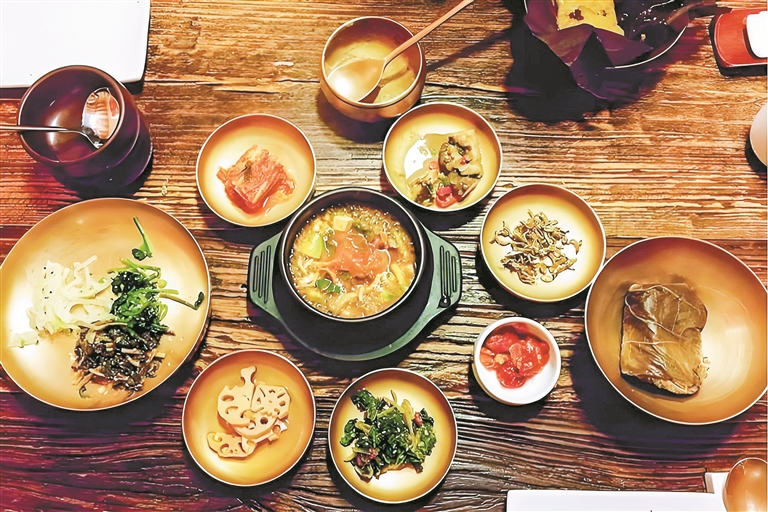
韩定食,又称韩国式客饭、韩式套餐,是韩国传统饮食中较正式的宴席形式。标准配置包含米饭、汤品、泡菜及小瓷锅炖汤,主菜常见九折板(小麦煎饼包肉类蔬菜)与神仙炉(炖煮火锅),辅以煎饼类、生鱼片等。烹饪方式涵盖蒸、烤、烫、拌等,除泡菜外不采用辣椒粉调味。菜肴按3至12碟规格陈列,包含前菜、主食、副食及餐后甜点。
Hanjeongsik, the quintessential Korean formal set meal, is a masterpiece of traditional banquet-style dining. It centers on rice, soup, kimchi, and a savory hot pot stew. Highlights often include Gujeolpan (an elegant platter of nine delicacies wrapped in thin wheat pancakes) and Sinseollo (a royal hot pot). Cooking relies on steaming, grilling, and blanching; no chili powder is used except in kimchi. A full course ranges from three to 12 side dishes, flowing from appetizers to main courses and ending with traditional desserts.
 关键词
关键词 简介
简介 重点
重点 分析
分析 猜你想问
猜你想问